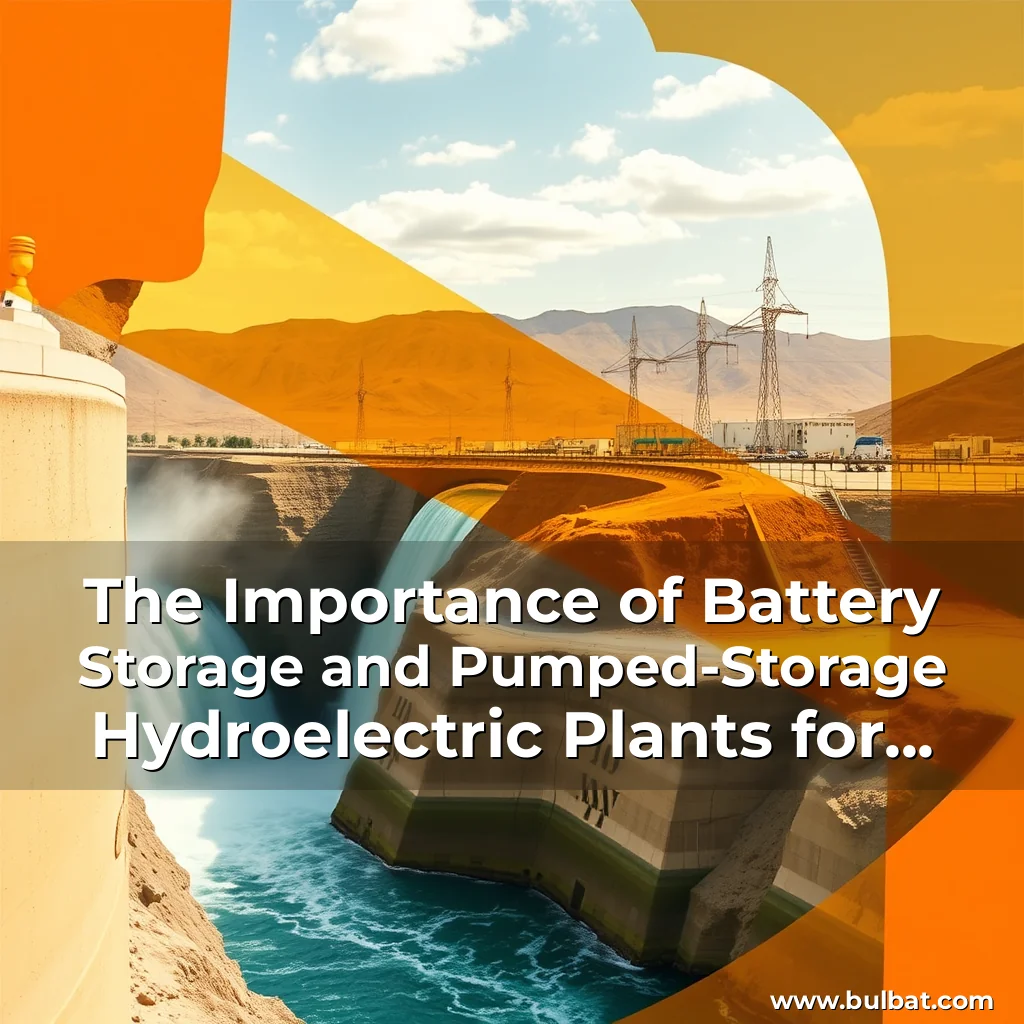
The National Office of Electricity and Drinking Water (ONEE) has recognized the importance of implementing battery energy storage systems (BESS) and pumped-storage hydroelectric plants (STEPs) to address the intermittency of renewable energy production and stabilize Morocco’s national power grid.
The Need for Battery Energy Storage Systems (BESS)
The ONEE has decided to turn to battery storage solutions to mitigate the intermittency of renewable sources such as wind and solar. Battery energy storage systems (BESS) have become an increasingly popular solution worldwide to address this challenge. The planned capacity of BESS in Morocco is 1,600 MW, with deployments across several strategic locations, including:
- The Kénitra thermal power plant (270 MW)
- The Settat substation (150 MW)
- The Al Massira hydroelectric site (180 MW)
- The substations of Tit Mellil, Laâwamer, Tétouan, Khénifra, Khouribga, and Tensift I and II, with capacities ranging between 100 and 300 MW.
These systems will store surplus electricity generated by renewable sources during periods of low demand and release it during peak demand periods, thereby stabilizing the national grid.
Pumped-Storage Hydroelectric Plants (STEPs) for a Reliable Grid
In addition to BESS, the ONEE is placing great emphasis on the development of pumped-storage hydroelectric plants (STEPs). These facilities offer a reliable and efficient way to store electricity and can provide a storage capacity of 10,000 MW by 2050, enough to meet five hours of peak demand. According to Kamal Htoute, Director of Strategy and Planning at ONEE, the Office has conducted a recent study on the electric storage potential of STEPs, which has led to the development of new pumped-storage facilities.
“We intend to accelerate the development of new pumped-storage facilities based on the findings of this study,”
said Htoute.
Why STEPs are a Key Solution for Morocco’s Power Grid
The STEPs will provide several benefits, including:
- Reducing reliance on fossil fuels
- Improving the resilience and reliability of the national grid
- Addressing the intermittency of renewable sources such as wind and solar
- Maintaining a stable energy supply
The decision to invest in STEPs is well-founded, given the highly competitive cost of photovoltaic solar energy, currently estimated at approximately 0.40 dirhams per kilowatt-hour.
Conclusion
In conclusion, the ONEE’s decision to invest in battery energy storage systems and pumped-storage hydroelectric plants is a well-founded strategy to address the challenges posed by the intermittency of renewable sources and stabilize Morocco’s national power grid. By deploying these systems, the Office aims to improve the resilience and reliability of the national grid while reducing reliance on fossil fuels. The future of Morocco’s power grid is looking brighter with the integration of these cutting-edge technologies.