Solar Energy Saves the Day
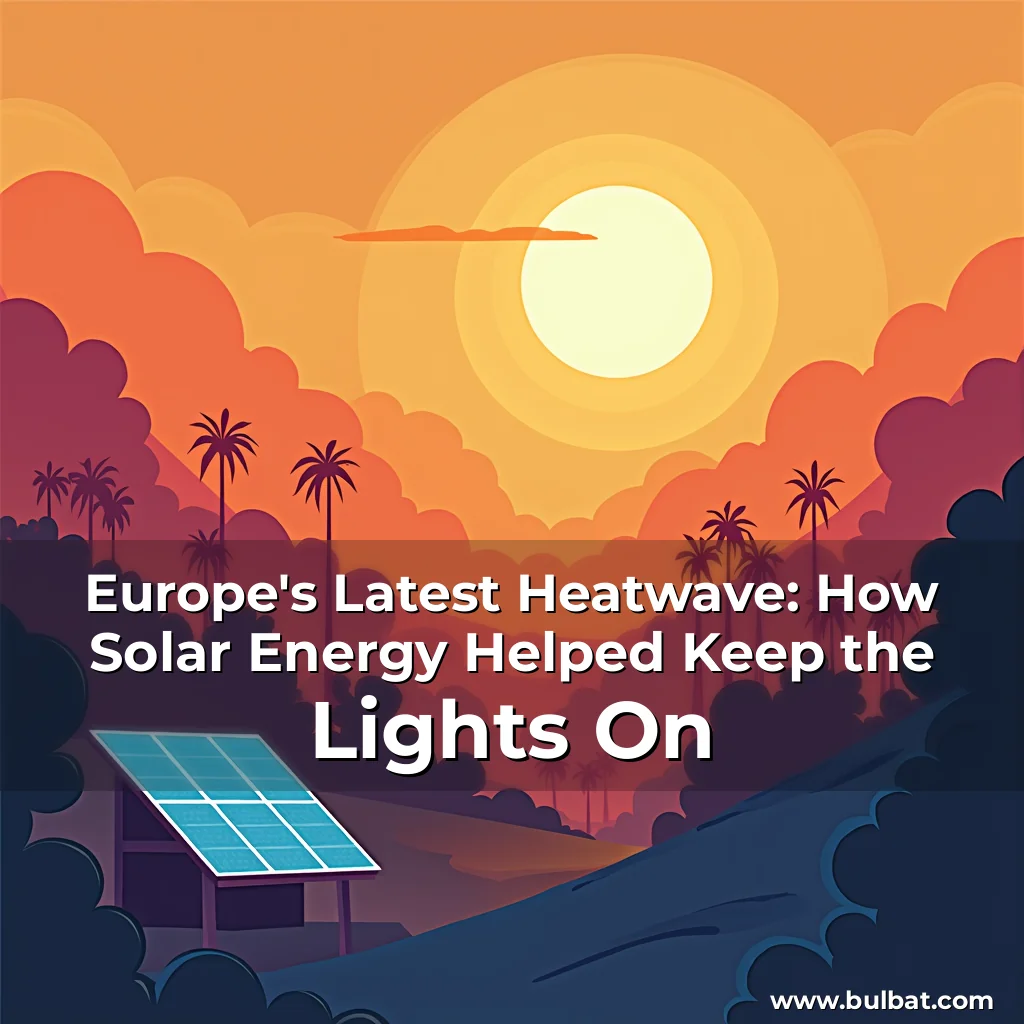
Europe’s latest heatwave brought temperatures soaring to record highs, but the continent’s power grids managed to pass the “stress test” thanks to the timely arrival of solar energy. According to energy think tank Ember, the sunshine helped prevent blackouts and even reduced the strain on power grids.
How Did Solar Energy Help Europe Get Through the Heatwave?
• Increased the availability of solar energy
• Helped Europe’s power grids pass the stress test of extreme heat
• Flooded grids with cheap, clean electricity during daytime hours
• Delivered up to 50 gigawatts (GW) of power in Germany, generating 33-39% of the country’s electricity
• Surpassed the highest EU solar generation on record at 45 terrawatt hours (TWh) in June 2025
Thermal Power Plants Struggled in the Heat
• 17 out of 18 nuclear power plants in France faced capacity reductions during the heatwave
• The Beznau nuclear power plant in Switzerland had its capacity halved due to high river temperatures
• Coal power plants in Poland faced cooling concerns, leading to an ‘anti-blackout package’ proposal by the government and grid operator PSE
Power Outages in Italy
• The overheating of cables is the likely cause of power outages in Italy on 1 July
• Ember notes that the use of energy storage is still insufficient, leading to reduced energy supply after sunset
The Heatwave Triggered a Spike in Electricity Prices
• Average daily power prices doubled or tripled in some countries
• Prices spiked above €470/MWh in Poland and €400/MWh in Germany during the evening peak on 1 July
• Interconnectors helped deliver electricity to where it was needed most, dissolving price spikes quickly
• Greater battery storage is needed to spread out the variable energy that solar and wind produce
• Better demand flexibility is required to shift non-critical demand to periods of abundant supply
• More investment is needed in distributed energy sources capable of starting the network on their own, such as solar farms with grid-forming inverters
• Distributed energy sources can start the network on their own
• Solar farms with grid-forming inverters can start without an external voltage supply
• A recent project by the UK National Energy System Operator (NESO) showed the potential of this solution, exploring how wind and solar could be used to restart the grid after a blackout
The latest heatwave has highlighted the importance of solar energy in keeping Europe’s power grids running smoothly. As the continent continues to grapple with the challenges of climate change, it’s clear that we need to invest in the infrastructure that will help us cope with increasingly severe heatwaves. By prioritizing solar energy, energy storage, and distributed energy sources, we can create a more resilient and sustainable energy system for the future.