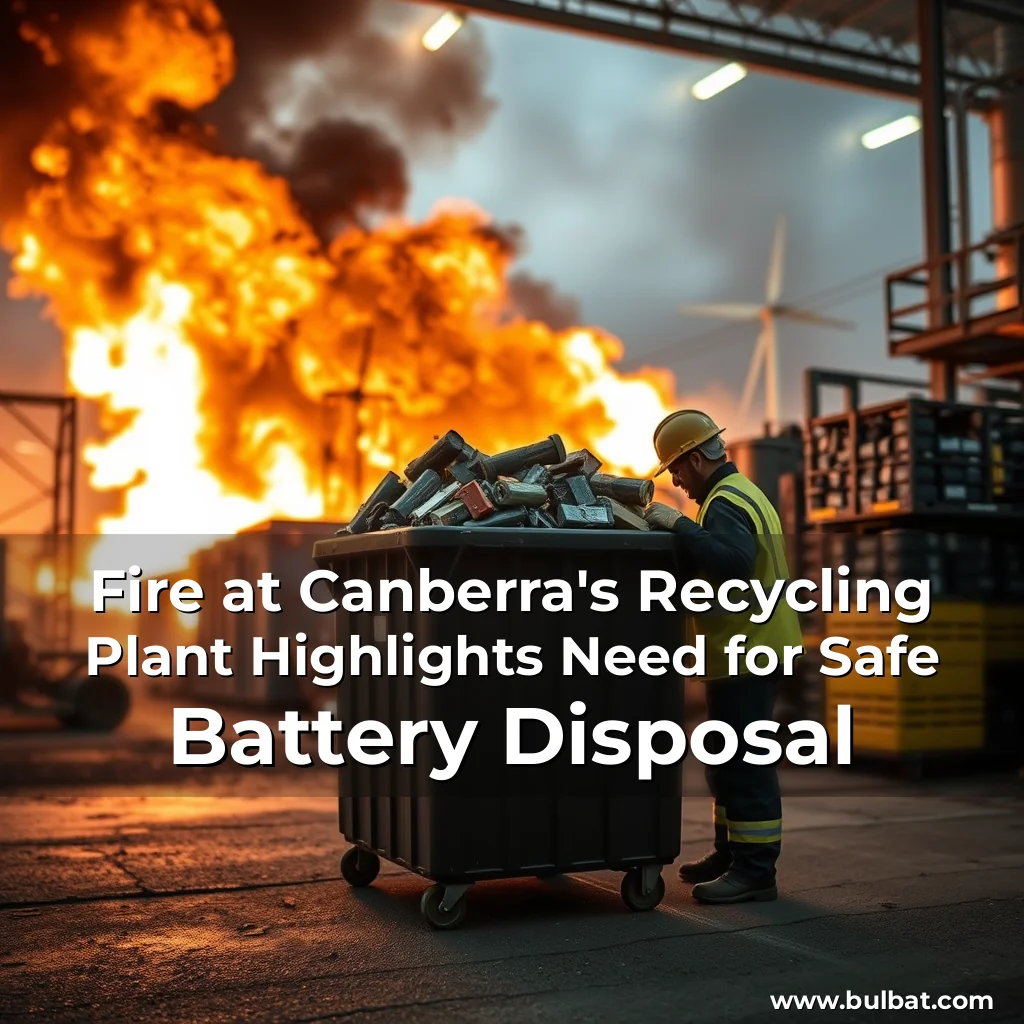
The devastating fire that ravaged Canberra’s recycling plant on Boxing Day 2022 is a stark reminder of the importance of safe battery disposal practices. The incident, which was caused by the improper disposal of discarded batteries, highlights the need for residents and businesses to take responsibility for the safe disposal of batteries.
Incidents of Battery-Related Fires on the Rise
Battery-related fires are a growing concern in Australia, with incidents significantly increasing in recent years. The waste and recycling industry is working to mitigate the risk of such fires, which can have devastating consequences. In 2022 alone, the industry reported up to 12,000 battery-related fires.
Causes of Battery-Related Fires
The investigation into the Canberra fire found that lithium batteries, commonly found in household batteries and rechargeable lithium-ion batteries in laptops, mobile phones, and cameras, were the suspected cause of the fire. The improper disposal of these batteries in household bins contributed to the incident.
Importance of Safe Battery Disposal
Safe battery disposal is crucial to prevent fires, protect the environment, and conserve resources. Batteries contain valuable materials like lithium, nickel, and zinc that can be recovered and reused in new products if recycled properly. However, the current national recycling rate for household batteries is estimated at only 15 per cent.
Safe Disposal Options
Residents can safely dispose of batteries at various locations, including major supermarkets, retailers, and council Community Recycling Centres. Loose handheld batteries (AA, AAA, C, D, 9V, 6V, and button cell) can be recycled at Woolworths, Coles, Aldi, IGA, and Bunnings stores, as well as B-cycle accredited locations.
- Battery disposal at these locations is often free or low-cost, making it an accessible option for residents.
- Residents can tape both ends of the terminals to reduce the risks of sparks that can ignite a fire.
- Storing batteries safely out of reach of children is also essential.
Embedded Batteries Pose a Challenge
The growing prevalence of products with embedded batteries in our homes poses a challenge due to the difficulty of removing them for disposal at the end of their life. Common household items containing embedded batteries include Bluetooth speakers, electric toothbrushes, e-scooters, e-bikes, hoverboards, and wearable devices.
The NSW Government has committed to introducing legislation mandating participation in battery product stewardship schemes this year. Industry, local government, and other stakeholders will be consulted prior to this.
By requiring battery suppliers to participate in product stewardship schemes, the NSW Government aims to reduce the risk of battery-related fires. The government has also committed to increasing the national recycling rate for household batteries.
The fire at Canberra’s recycling plant highlights the need for safe battery disposal practices. By taking responsibility for the safe disposal of batteries, residents and businesses can help prevent fires, protect the environment, and conserve resources. With the introduction of legislation and regulation, the NSW Government is working to reduce the risk of battery-related fires and promote safe battery disposal practices throughout the region.