Pioneering Projects Set to Replace Fossil Fuels
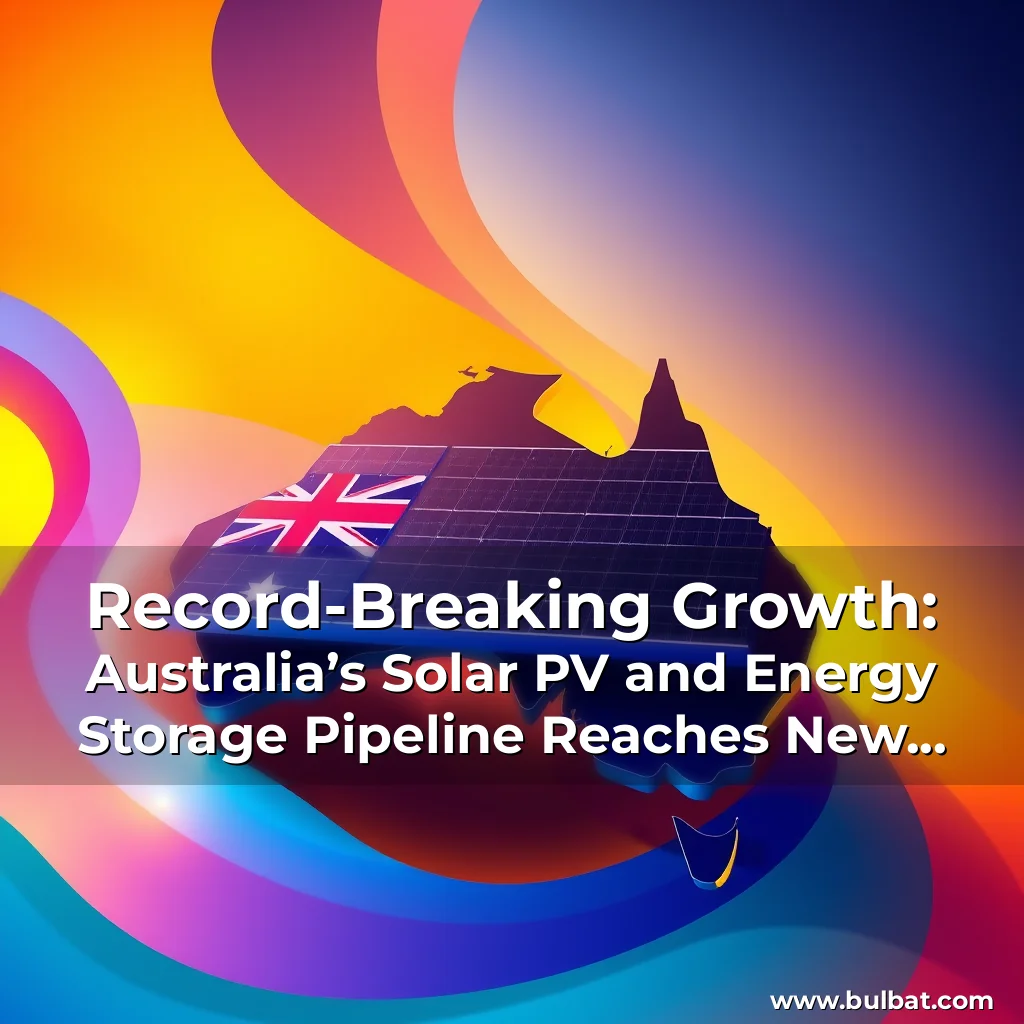
The first quarter of 2023 witnessed a remarkable surge in Australia’s solar PV capacity, with the addition of 150MW Gangarri Solar Farm and 40MW Kingaroy Solar Farm in Queensland, and 46MW Mokoan Solar Farm in Victoria. These pioneering projects have not only set a new benchmark for the country’s solar energy growth but also paved the way for a record-breaking year.
AEMO’s New Generation and Energy Storage Capacity Pipeline
As of March 2025, the new generation and energy storage capacity pipeline has surpassed 51GW, representing a staggering 37% year-on-year (YoY) increase. This remarkable growth can be attributed to the surge in solar PV and battery energy storage systems (BESS) capacity.
- Standalone battery energy storage systems (BESS) have increased from 11GW to 20.5GW, accounting for 40% of the new generation and energy storage capacity pipeline.
- Hybrid solar and battery energy storage projects have increased from 4.5GW to 5.6GW, making up 11% of the pipeline.
- Wind projects have increased from 7.5GW to 8.7GW, accounting for 17% of the pipeline.
- Solar PV has increased from 10.2GW to 12.1GW, accounting for 24% of the pipeline.
Distribution of Capacity across NEM States
The capacity is distributed unevenly across the New Energy Market (NEM) states, with 36% in New South Wales, 31% in Queensland, 23% in Victoria, 10% in South Australia, and 0.25% in Tasmania.
Record-Breaking Growth: AEMO’s Manager Speaks Out
Margarida Pimentel, manager of AEMO’s onboarding and connections group, stated that the pipeline of new projects required to replace ageing power stations and meet future demand is the largest ever recorded. “42 project applications have been approved, 28 projects have been registered, and 16 projects have reached their full MW output so far this financial year,” Pimentel said. “This will be a significant boost, considering the uncertainty surrounding Australia’s coal phase-out.”
Coal Phase-Out Uncertainty
Although AEMO has predicted that 2038 will be the full withdrawal date for coal power stations, research group Cornwall Insight has raised questions about the feasibility of this timeline. They suggest that these could operate beyond 2038 and well into the 2050s.
Standalone Battery Energy Storage Pipeline Grows by 86% YoY
The pipeline of new standalone BESS in the NEM has increased by 86% YoY, according to AEMO’s scorecard. This rapid increase in battery technology is making its way through the pipeline across all regions.
- Utility-scale solar PV generation and BESS are leading the applications for the financial year to date.
- Although announced solar-plus-storage projects in Australia have seen a rise in recent months, these are still minimal and have not been shared across most states.
New Projects Coming Online
March 2025 saw the progression of BESS coming online, with French independent power producer (IPP) Neoen bringing its 238.5MW/477MWh 2-hour duration Blyth BESS in South Australia to full output.
| Project | Capacity (MW) | Duration (hours) |
|---|---|---|
| Blyth BESS | 238.5MW | 2 hours |
Key Takeaways
The record-breaking growth in Australia’s solar PV and energy storage pipeline is a significant boost to the country’s energy transition. As the pipeline continues to grow, it will be crucial to monitor the progress of these projects and ensure a smooth transition to a low-carbon economy. By 2038, AEMO predicts that all coal power stations will be phased out, and the solar PV and energy storage capacity will play a vital role in meeting Australia’s future energy demands.