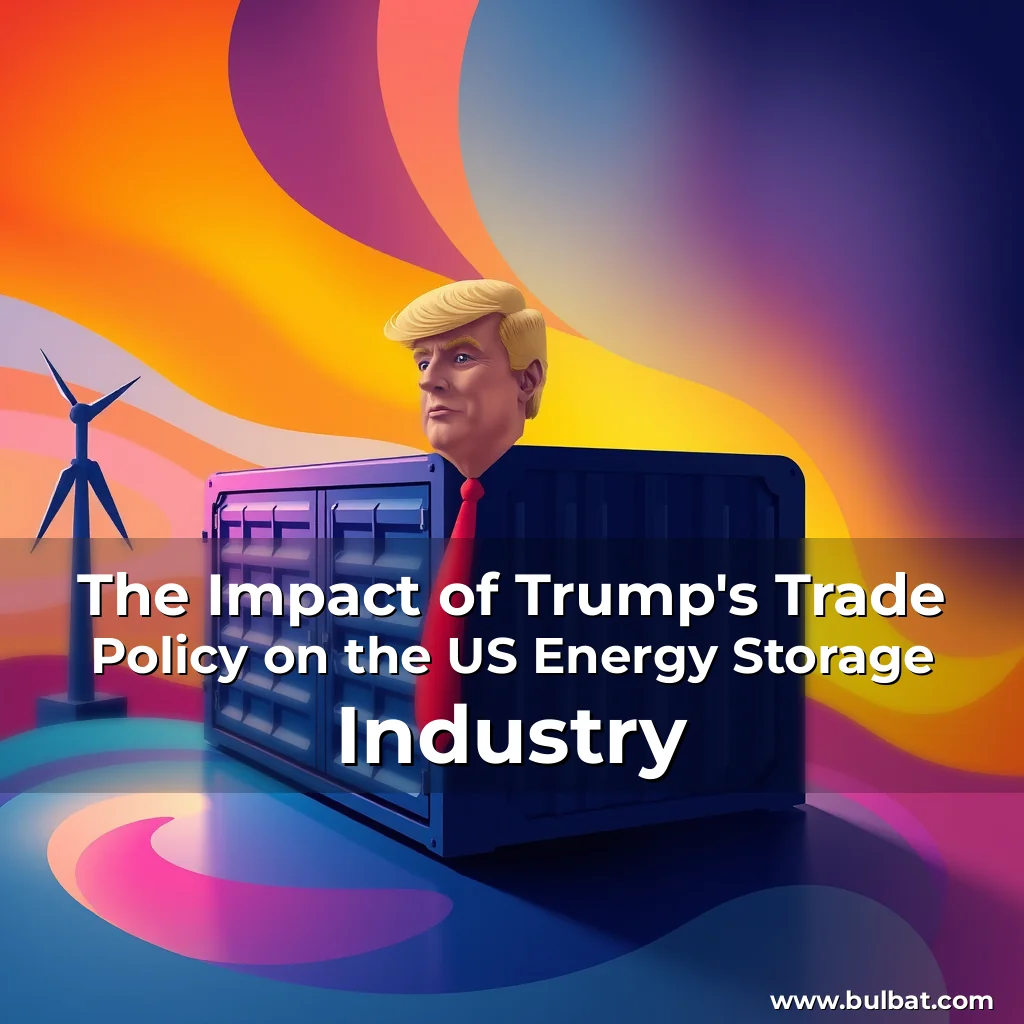
The United States’ booming energy storage industry is facing significant challenges due to President Donald Trump’s combative and chaotic trade policy. The “Liberation Day” tariffs, which Trump has since dialed back for most countries, have caused a dramatic reduction in merchant energy storage development in key markets like Texas. Project developers with committed offtake agreements have the option to renegotiate pricing with their customers, but merchant developers looking to break ground in 2025 may wait until next year and hope for a resolution in the meantime.
Uncertainty and Delayed Investment
The average U.S. tariff on Chinese imports is now 124.1%, six times higher than at the start of Trump’s second term. This has pushed the U.S. deployment cost of a four-hour lithium-ion battery energy storage system above 2023 levels. As a result, analysts expect annual additions to plummet in the near term, especially after 2025, due to higher-than-expected costs and looming policy uncertainties.
- Isshu Kikuma, energy storage analyst for Bloomberg NEF, expects annual additions to plummet in the near term due to higher-than-expected costs and looming policy uncertainties.
- Ravi Manghani, senior director of strategic sourcing at Anza Renewables, notes that the sector’s challenges could deepen this year and next before global supply chains rebalance.
A Global Supply Chain Problem
The U.S. energy storage industry relies heavily on imports from abroad. Even most U.S.-based manufacturers need to source inputs from China, the largest supplier of lithium-ion batteries. The lack of a coherent U.S. energy security policy has led to a reliance on Chinese imports, which are now facing significant tariffs.
| Country | Tariff Rate |
|---|---|
| China | 124.1% |
| South Korea | 6.1% |
| Japan | 2.6% |
| Vietnam | 0% |
Opportunities for U.S. Manufacturers
Despite the challenges, some analysts believe that protectionist policies could boost U.S. battery manufacturing in the long run. Existing manufacturers with production capacity to spare may benefit from the tariffs, as they can deliver batteries to customers at a lower cost.
- Jon M. Williams, CEO of Viridi, notes that his company has capacity to scale to nearly a gigawatt of annual output and can deliver as demand increases.
- Cam Dales, cofounder of U.S.-based sodium-ion battery startup Peak Energy, believes that the tariff scheme could be perfect for American battery companies if there was a temporary bridge with lower rates on materials and components.
A Coherent Energy Security Policy
A coherent U.S. energy security policy would acknowledge the reality of China’s lithium-ion dominance and use tariffs to kindle a homegrown sodium-ion supply chain. This could provide an opening for lithium-ion alternatives and reduce the industry’s reliance on Chinese imports.
“While we have all the minerals, we don’t have any of the midstream processing or component manufacturing, which means we rely entirely on imports for the time being,” said Cam Dales, cofounder of U.S.-based sodium-ion battery startup Peak Energy.
The Bottleneck
The bottleneck in the U.S. energy storage industry lies in the midstream processing and component manufacturing. The lack of a coherent U.S. energy security policy has led to a reliance on Chinese imports, which are now facing significant tariffs. The industry needs a more comprehensive approach to address this bottleneck and promote a homegrown supply chain.
Conclusion
The impact of Trump’s trade policy on the U.S. energy storage industry is significant. The sector’s challenges could deepen this year and next before global supply chains rebalance. However, some analysts believe that protectionist policies could boost U.S. battery manufacturing in the long run. A coherent U.S. energy security policy would acknowledge the reality of China’s lithium-ion dominance and use tariffs to kindle a homegrown sodium-ion supply chain. The industry needs a more comprehensive approach to address the bottleneck in midstream processing and component manufacturing.