
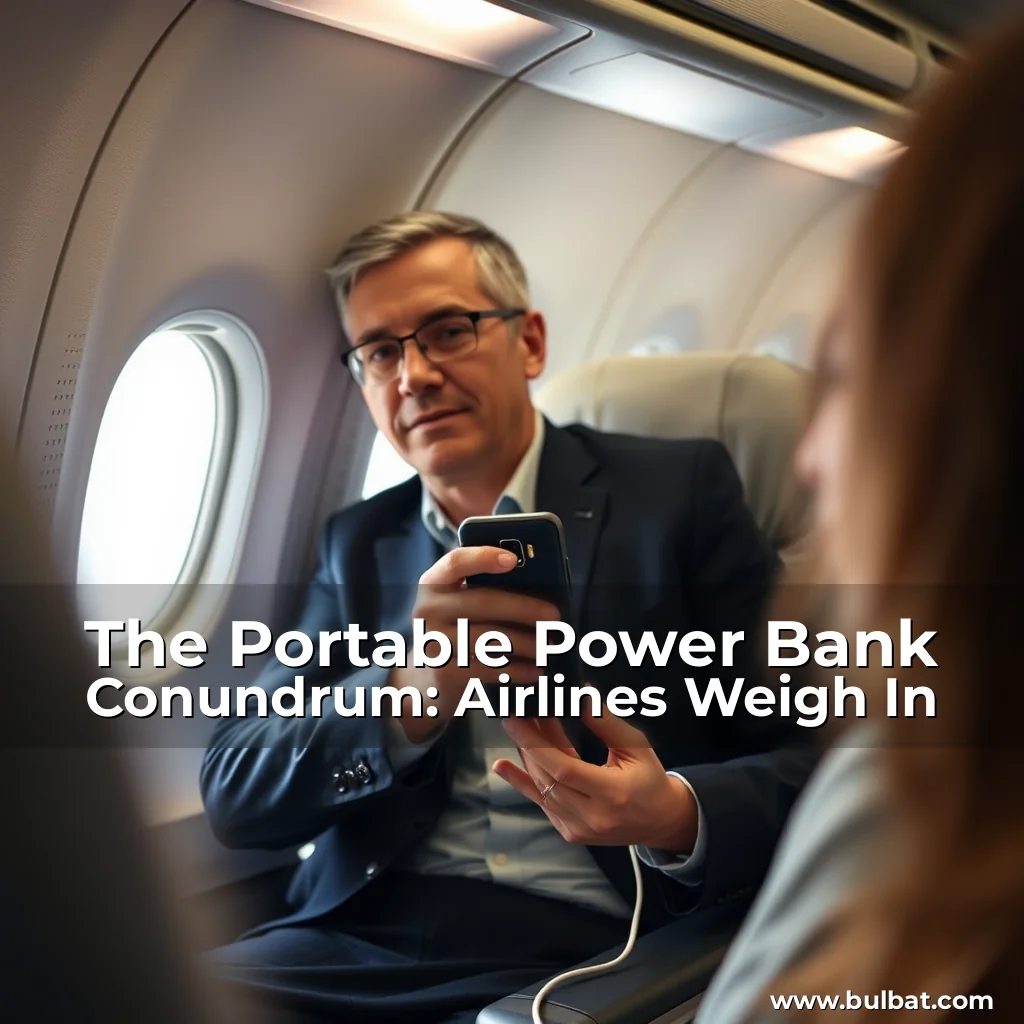
The Rise of Portable Power Banks: A Cautionary Tale of Safety Concerns
The rise of portable power banks has made traveling easier, but the convenience comes with a price. Some airlines have taken steps to address safety concerns, implementing restrictions on the use of power banks during flights. This article will delve into the different approaches adopted by various airlines, highlighting their unique policies and guidelines.
Airlines’ Stance on Power Banks
- Qantas Airways
- Emirates
- Singapore Airlines
- Cathay Pacific
- Thai Airways
- Eva Air
- China Airlines
- Korean Air
Qantas Airways: A No-Go for Power Banks
Qantas Airways has taken a firm stance against power banks on flights. They require passengers to store their power banks in carry-on luggage, restricting their usage to pre-flight charging. This approach aims to minimize potential hazards and prevent any potential fire risks.
Key Points:
- Power banks must be stored in carry-on luggage.
- Passengers cannot use power banks during the flight.
Emirates: A Grey Area
Emirates takes a more lenient approach, allowing power banks on board but restricting their usage. Passengers are not permitted to charge their devices during the flight, but they can store their power banks and charge them before takeoff or after landing.
Key Points:
- Power banks are allowed on board but cannot be charged during the flight.
- Passengers can store power banks and charge them before takeoff or after landing.
Singapore Airlines: A Limit on Power Bank Usage
Singapore Airlines permits power banks, but with a twist. Passengers can use their power banks, but they are only allowed to do so within specific limits. They are not permitted to connect their power banks to in-seat power systems.
Key Points:
- Power banks are permitted, but with specific usage limits.
- No connection to in-seat power systems is allowed.
Cathay Pacific: Approval Required
Cathay Pacific requires prior approval for high-capacity power banks. Passengers must obtain approval from the airline before carrying high-capacity units on board.
Key Points:
- High-capacity power banks require prior approval.
- No approval is needed for standard power banks.
Thai Airways and Eva Air: Bans Imposed
Thai Airways and Eva Air have implemented strict bans on the use of power banks and spare lithium batteries during flights. These bans are effective as of March 15, 2025, and March 1, 2025, respectively.
Thai Airways:
| Date | Ban Effective |
|---|---|
| March 15, 2025 | Ban on power bank use onboard the aircraft. |
Eva Air:
“Eva Air has implemented a strict ban on the use and charging of power banks and spare lithium batteries during flights, effective as of March 1, 2025. We take the safety of our passengers and crew very seriously, and this measure is aimed at preventing any potential risks.”
China Airlines and Korean Air: Restrictions in Place
China Airlines and Korean Air have implemented restrictions on power banks carried by passengers. China Airlines bans the use or charging of power banks during flights, while Korean Air restricts batteries above 160Wh and limits batteries between 100Wh and 160Wh to two per person, with the need for airline approval.