The Future of Power: How Electricity Storage is Reshaping Our Energy Landscape
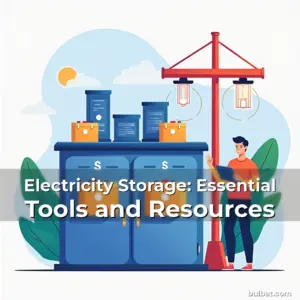
In an era defined by climate change and technological innovation, electricity storage has emerged as a cornerstone of sustainable energy solutions. As renewable sources like solar and wind become increasingly prevalent, their intermittent nature necessitates reliable methods for storing excess power.
This shift towards cleaner energy systems demands robust storage technologies that can bridge the gap between supply and demand. The importance of effective electricity storage cannot be overstated, as it enables grid stability, reduces reliance on fossil fuels, and supports decentralized energy production models.
The Evolution of Electricity Storage Technologies
Historically, electrical energy storage was limited to mechanical devices such as pumped hydroelectric storage and flywheels. These early methods laid the groundwork for modern storage solutions but had significant limitations regarding location requirements and efficiency rates.
The emergence of electrochemical battery technology marked a turning point in energy storage capabilities. Lead-acid batteries dominated early applications before lithium-ion batteries revolutionized portable electronics and electric vehicles through higher energy density and longer lifespans.
Battery chemistry advancements have led to new developments beyond traditional lithium-based systems. Flow batteries, sodium-sulfur cells, and solid-state alternatives now offer promising options tailored for different scale and duration needs.
Thermal storage systems represent another evolving category, utilizing materials that absorb heat during off-peak hours and release it when required. Molten salt storage used in concentrated solar power plants exemplifies this principle at utility-scale operations.
Emerging innovations like hydrogen fuel cells and compressed air energy storage continue to expand the possibilities of electricity storage across diverse application scenarios.
Economic Implications of Modern Battery Systems
While initial capital costs for advanced battery systems remain high, long-term economic benefits often outweigh these expenses. Reduced peak load charges, lower maintenance requirements, and extended system lifetimes contribute significantly to overall cost savings over time.
Energy market dynamics are changing rapidly due to declining battery prices. According to industry reports from BloombergNEF, lithium-ion battery pack prices have dropped by approximately 89% since 2010 while performance metrics have steadily improved.
Storage capacity investments are expected to reach $660 billion globally by 2030 according to International Energy Agency forecasts. This surge reflects growing confidence in storage’s role within future energy infrastructures.
The integration of storage systems into existing grids requires careful financial modeling to determine optimal deployment strategies. Factors such as site-specific conditions, regulatory frameworks, and projected usage patterns must be considered in each implementation case.
Cost-Benefit Analysis Frameworks
A standard cost-benefit analysis considers both direct and indirect impacts of implementing storage solutions. Direct costs include equipment procurement, installation labor, and infrastructure upgrades necessary to support the system.
Indirect benefits encompass reduced carbon emissions, enhanced grid resilience against outages, and increased property values associated with smart energy systems. Quantifying these non-monetary advantages presents challenges but highlights broader societal value propositions.
Time-value-of-money calculations help assess how immediate investment relates to long-term returns. Discounted cash flow analyses provide objective measures for comparing various storage project proposals.
Government incentives play a crucial role in shaping economic viability assessments. Tax credits, grants, and feed-in tariffs designed for renewable energy projects frequently extend payback periods and improve return-on-investment ratios.
Environmental Impact Assessment of Different Methods
Every electricity storage method carries environmental consequences that require thorough evaluation. Life cycle assessments consider resource extraction, manufacturing processes, operational phases, and end-of-life disposal procedures.
Lithium-ion batteries, though efficient, involve mining activities for raw materials like cobalt and nickel which raise ethical concerns related to worker safety and habitat destruction in source regions.
Pumped hydroelectric facilities require substantial land use changes and can disrupt local ecosystems through dam construction. However, they generally maintain low operational emissions compared to other storage types.
Solid-state battery research aims to reduce dependence on rare earth elements while improving recyclability rates. These next-generation systems may mitigate some of the sustainability issues associated with conventional battery chemistries.
Compressed air energy storage involves geological formations that could pose risks if improperly managed. Environmental impact studies are essential to ensure safe operation without compromising surrounding areas’ integrity.
Technological Advancements Driving Efficiency Improvements
Recent breakthroughs in nanotechnology have enabled the development of ultra-thin conductive layers within battery components. These improvements enhance ion mobility, resulting in faster charge/discharge cycles with minimal degradation over time.
Artificial intelligence algorithms are being applied to optimize charging schedules based on real-time data inputs. Predictive analytics helps maximize energy utilization while minimizing wear-and-tear on storage units.
Advances in thermal management systems allow better control of internal temperatures during operation. Maintaining optimal operating ranges extends component lifespan and prevents hazardous situations caused by overheating.
Material science innovations continue to push boundaries in energy density achievable by current storage mediums. Graphene-enhanced electrodes promise significant increases in power output capabilities without sacrificing safety standards.
Grid Integration Challenges and Solutions
Integrating large-scale storage installations into existing power networks poses technical hurdles related to voltage regulation and frequency stabilization. Smart inverters equipped with advanced monitoring features help manage these complexities effectively.
Distributed generation combined with localized storage creates microgrid environments capable of operating independently from central utilities. This model enhances reliability during extreme weather events or regional blackouts.
Communication protocols between storage systems and grid operators need standardized formats to facilitate seamless information exchange. Open-source platforms promote interoperability among disparate technologies deployed across different locations.
Cybersecurity remains a critical concern as digital interfaces enable remote access and automated decision-making processes. Implementing multi-layer security architectures protects against potential threats targeting energy infrastructure.
Regulatory frameworks must evolve alongside technological progress to address emerging challenges posed by decentralized energy resources. Policy makers work closely with engineers to develop flexible guidelines accommodating rapid innovation cycles.
Rural Electrification Opportunities Through Innovative Storage Models
In remote communities lacking connection to centralized grids, innovative storage solutions offer transformative potential. Solar-powered lighting systems paired with compact battery arrays provide basic electricity services without requiring extensive transmission lines.
Micro-hydro setups integrated with energy storage create self-sustaining power loops ideal for mountainous regions where water flow is consistent year-round. Such hybrid configurations balance seasonal variations in availability with stable outputs.
Portable storage units powered by kinetic motion capture technology demonstrate promise for mobile populations relying on human activity rather than fixed installations. These adaptable systems cater specifically to nomadic lifestyles needing temporary energy access.
Community-owned cooperatives managing shared storage assets empower residents to participate actively in energy decisions affecting their daily lives. Collaborative governance structures foster accountability and transparency around resource allocation practices.
Mobile recharge stations using wireless induction charging principles could redefine how people interact with stored energy in everyday contexts. This approach minimizes physical contact points while maintaining convenient accessibility levels.
Fuel Cell Technology: A Promising Alternative Pathway
Fuel cell systems generate electricity through chemical reactions involving hydrogen gas rather than traditional combustion processes found in conventional generators. This clean conversion mechanism emits only water vapor as exhaust product.
Hydrogen electrolysis allows surplus renewable energy to be converted into storable fuel when demand levels dip below supply capacities. Storing hydrogen instead of electricity provides alternative means for balancing fluctuating generation profiles.
Proton exchange membrane fuel cells operate efficiently under varying temperature ranges making them suitable for residential applications where ambient conditions fluctuate continuously throughout seasons.
Combining fuel cell stacks with regenerative braking systems captures otherwise wasted kinetic energy from transportation networks converting it back into usable forms of power.
Comparing Storage Options Across Key Performance Metrics
When evaluating different electricity storage solutions, several key performance indicators emerge as primary considerations. Cycle life refers to the number of complete charge-discharge cycles a unit can undergo before its capacity degrades appreciably.
Round-trip efficiency measures how much of the original energy input remains available after undergoing full storage and retrieval processes. Lithium-ion systems typically achieve efficiencies above 90%, whereas pumped hydro might register around 70-85% depending upon facility design specifics.
Power rating indicates the maximum rate at which energy can be delivered from the storage medium. High-power applications like smoothing wind farm fluctuations benefit greatly from fast response times offered by certain battery chemistries.
Energy density determines portability factors; systems offering higher watt-hours per kilogram are preferable for space-constrained environments. Solid-state prototypes currently show considerable promise in this regard despite still being relatively immature commercially.
Deployment flexibility varies considerably across technologies. Modular designs permit easy scalability allowing organizations to incrementally add storage capacity aligned precisely with evolving operational needs.
Environmental footprint encompasses material sourcing implications along with decommissioning logistics later stages lifecycle journeys. Recyclable components simplify responsible end-of-use handling procedures reducing waste accumulation risks.
The Role of Government Policies in Shaping Market Dynamics
National governments worldwide recognize the strategic significance of developing domestic storage industries to bolster energy independence goals. Subsidies directed toward R&D initiatives accelerate commercialization timelines for novel technologies entering markets.
Feed-in tariff programs guarantee purchasers fixed payments for injecting renewable-generated electricity back into public networks thereby encouraging adoption rates amongst private entities seeking profitable ventures aligned with green agendas.
Carbon pricing mechanisms assign monetary values to greenhouse gas emissions incentivizing companies transitioning away from polluting alternatives favoring cleaner choices economically viable over prolonged durations.
Zoning regulations influence placement opportunities available for ground-mounted installations restricting urban centers from erecting massive storage farms potentially conflicting spatially with residential zones.
Tax incentive packages targeted explicitly at small businesses promoting installation efforts result in widespread participation helping build grassroots momentum toward national decarbonization targets established collectively by policymakers.
Consumer Adoption Trends and Behavioral Shifts
As awareness grows concerning climate change impacts, consumers exhibit increasing interest in adopting home battery systems complementing rooftop photovoltaic arrays installed on personal properties.
Smart meter implementations give users visibility into consumption patterns enabling informed choices about when to utilize stored versus grid-provided electricity optimizing bills accordingly through strategic timing adjustments.
Peer-to-peer energy trading platforms facilitated digitally connect households willing to share excess generated electricity creating decentralized markets challenging traditional utility business models previously enjoying monopolistic positions.
Insurance providers adjust premium structures recognizing risk mitigation aspects provided by backup power supplies accessible during natural disasters reinforcing attractiveness proposition packages sold bundled together appealingly to cautious buyers.
Case Studies Demonstrating Successful Implementation Strategies
Hawaii’s Kauai Island Utility Cooperative implemented Tesla Powerpack installations achieving impressive results in stabilizing island grids plagued historically by unreliable diesel generator dependencies formerly relied upon heavily.
Germany’s Energiewende initiative showcases successful integration of vast solar PV arrays supported adequately by battery reserves ensuring continuous service delivery even amidst prolonged nighttime hours devoid of direct sunlight exposure.
New York State’s Reforming the Energy Vision program demonstrates proactive approaches taken toward preparing infrastructural readiness ahead of anticipated increased penetration levels foreseen from distributed energy resource proliferation trends.
South Australia’s Hornsdale Power Reserve project illustrates how rapidly deployable lithium-ion battery arrays can transform emergency response capabilities dramatically enhancing resilience against sudden disruptions threatening critical services reliant upon uninterrupted supply chains.
Future Outlook and Emerging Innovations
Ongoing scientific investigations explore quantum dot solar cells coupled with supercapacitors aiming to merge high-efficiency light harvesting abilities with ultra-fast charging characteristics simultaneously addressing two longstanding limitations impeding wider acceptance rates.
Research institutions globally invest heavily into graphene-based electrode formulations projecting exponential gains in conductivity properties essential for next-generation battery architectures striving toward unprecedented performance benchmarks.
Autonomous drone swarms carrying lightweight modular storage pods present intriguing prospects for dynamic distribution networks adapting fluidly to shifting demand concentrations occurring unpredictably across geographically dispersed areas experiencing variable population densities.
Biodegradable polymer films infused with nanostructured metal oxides open exciting avenues exploring biocompatible storage media compatible safely within living organisms hinting tantalizingly toward bio-integrated medical device applications yet uncharted territory awaiting further exploration.
Conclusion
The landscape of electricity storage continues to evolve rapidly driven by converging forces spanning technological advancement, policy reforms, and consumer behavior shifts. Understanding this multifaceted domain becomes imperative for stakeholders navigating complex transitions toward sustainable energy futures.
By embracing innovative storage solutions strategically, individuals and communities stand poised to reap substantial rewards including enhanced energy autonomy, reduced environmental footprints, and greater economic stability derived from optimized resource utilization practices cultivated thoughtfully today laying foundations securing resilient tomorrow’s energy ecosystems.

news is a contributor at BulBat. We are committed to providing well-researched, accurate, and valuable content to our readers.