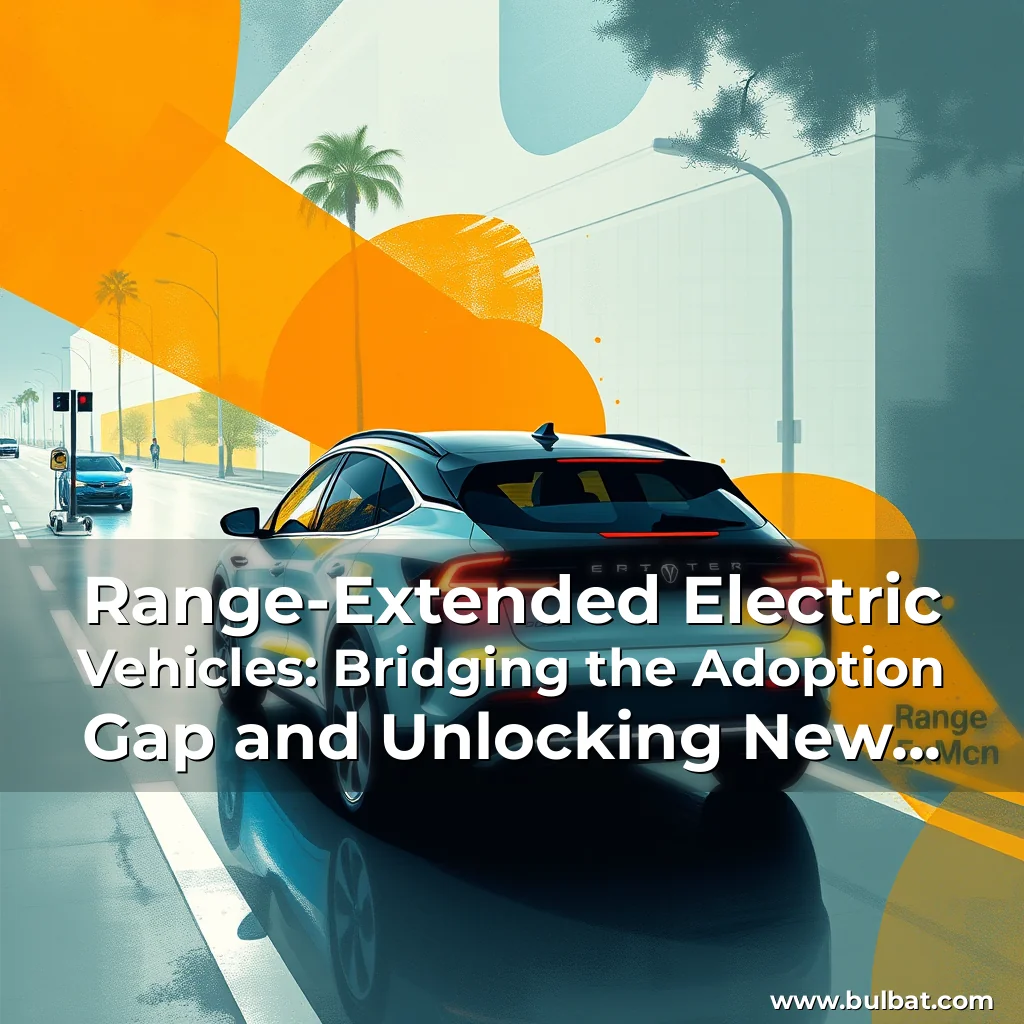
As the global automotive industry faces a slowdown in demand for fully electric vehicles (EVs), South Korean carmakers Kia and Hyundai are exploring alternative solutions to meet market demands. A promising approach is the development of range-extended electric vehicles (EREVs), which offer a hybrid of electric and internal combustion engines to bridge the adoption gap and generate new revenue streams for the struggling battery industry. ### Why EREVs? • Offer a lower price point and greater convenience in regions with underdeveloped charging infrastructure
• Provide a near-term opportunity for battery makers facing EV headwinds
• May replace plug-in hybrid vehicles (PHEVs), which use smaller battery packs
### EREV Evolution
#### Kia’s EREV Pickup
Kia is developing an EREV pickup model alongside its upcoming all-electric pickup aimed at the U.S. market. “If EVs alone cannot meet market demands, we are preparing EREVs as a complementary solution,” said Kia President Song Ho-sung during the company’s 2025 CEO Investor Day. The EREV pickup is designed to address the need for a more affordable and practical electric vehicle in the U.S. #### Hyundai’s EREV Plans
Hyundai is also accelerating development of EREVs, with plans to debut models in North America and China by late 2026 and begin mass sales in 2027. The company aims to capitalize on the growing demand for EREVs in emerging markets, particularly in China, where sales more than doubled in 2024 to 1.31 million units. #### Global EREV Market
• Stellantis’ RAM brand will release its Ramcharger 1500 EREV pickup later this year
• Ford is preparing a range-extended version of its Transit commercial van by 2027
• Sales of EREVs in China are expected to continue growing, driven by the increasing adoption of EREVs in emerging markets
### EREV Benefits for the Battery Industry
#### Economic Opportunity
• EREVs require more battery capacity than plug-in hybrid vehicles (PHEVs)
• Battery makers facing EV headwinds may benefit from EREV production
#### Industry Partnerships
• LG Energy Solution, Samsung SDI, and SK On are reportedly in talks with major automakers planning EREV launches
• SK On has already stated it is actively preparing EREV battery solutions in alignment with Hyundai’s strategy
### EREV Challenges and Uncertainties
#### Transition Technology
• EREVs may delay the broader shift to fully electric mobility
• Experts caution that while EREVs may soften the current EV market slump, they could also push back the battery industry’s long-anticipated boom
#### Economic Impact
• The impact on the battery industry may be more mixed than optimistic
• “EREVs present a welcome opportunity during this EV market plateau,” said Lee Jeong-doo, Battery Program Director at the Korea Institute for Advancement of Technology
### Market Outlook
• The global EREV market is expected to grow at a compound annual rate of 20%, reaching $518 billion by 2031
• Market Research Intellect forecasts that EREVs will play a significant role in the transition to electric mobility
| Company | EREV Models | Launch Year |
|---|---|---|
| Kia | EREV pickup | 2025 |
| Hyundai | EREV models in North America and China | 2026 (debut), 2027 (mass sales) |
| Stellantis’ RAM brand | Ramcharger 1500 EREV pickup | 2025 (later this year) |
| Ford | Range-extended Transit commercial van | 2027 |
In a
quote
, Lee Jeong-doo, Battery Program Director at the Korea Institute for Advancement of Technology, highlighted the benefits of EREVs for the battery industry. “EREVs present a welcome opportunity during this EV market plateau. However, if they slow down full EV adoption in the long run, the impact on the battery industry may be more mixed than optimistic.”
While EREVs offer a promising solution to the EV market slump, experts caution that they may delay the broader shift to fully electric mobility. The EREV market is expected to grow at a compound annual rate of 20%, reaching $518 billion by 2031, according to Market Research Intellect. As the industry continues to evolve, it will be interesting to see how EREVs play a role in the transition to electric mobility.

news is a contributor at BulBat. We are committed to providing well-researched, accurate, and valuable content to our readers.