
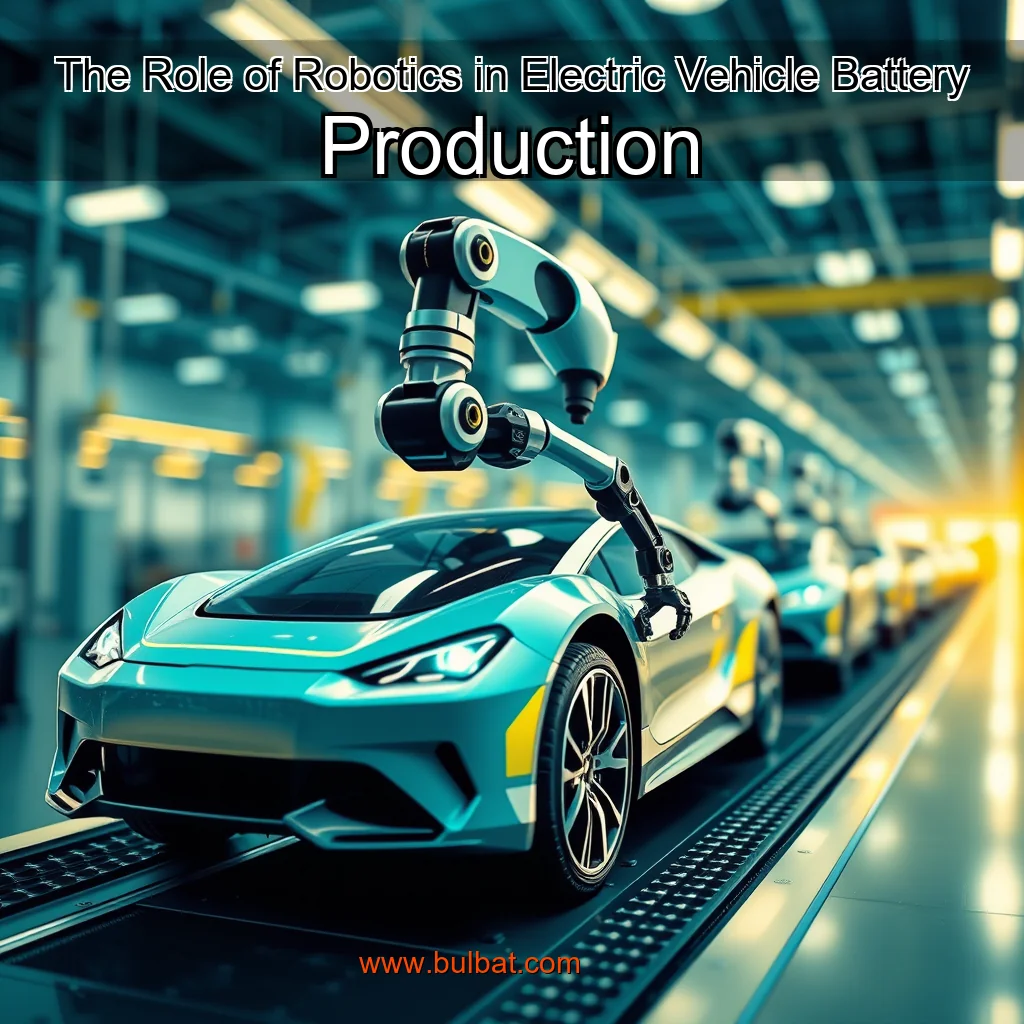
Electric vehicles are transforming the automotive industry with their eco-friendly and energy-efficient features.
The Rise of Electric Vehicles
Electric vehicles (EVs) have revolutionized the automotive industry with their eco-friendly and energy-efficient features. As governments worldwide implement stricter emissions regulations, the demand for EVs continues to rise. With the growing popularity of EVs, manufacturers are under pressure to improve their production efficiency and reduce costs.
Key Benefits of Electric Vehicles
The Rise of Robotic Automation in Battery Manufacturing
The shift towards electric vehicles (EVs) has led to a surge in demand for high-quality batteries. To meet this demand, battery manufacturers are turning to robotic automation to streamline their production processes.
Precise sorting is key to efficient battery recycling.
This level of precision is crucial in the battery recycling process, as it enables the efficient separation of valuable materials like lithium, nickel, and cobalt.
Understanding the Role of Automated Robotic Systems in Battery Recycling
The Benefits of Precise Sorting
Automated robotic systems play a vital role in the battery recycling process by providing precise sorting capabilities. This precision is essential in identifying and separating individual battery cells based on their unique characteristics.
Predictive maintenance of robotic welding systems. Predictive maintenance of other equipment.
Introduction
Robotic laser welding has revolutionized the manufacturing industry with its unparalleled precision, speed, and quality. This cutting-edge technology has transformed the way welds are made, offering numerous benefits that have far-reaching implications for industries such as aerospace, automotive, and medical devices.
Key Benefits of Robotic Laser Welding
How Robotic Laser Welding Works
Robotic laser welding involves the use of a high-powered laser beam to melt and join materials together.
Precision is key to battery module assembly, as even slight variations can impact performance and lifespan.
This level of precision is crucial for battery module assembly, as even slight variations can significantly impact the overall performance and lifespan of the battery.
The Importance of Precision in Battery Module Assembly
Understanding the Challenges
Battery module assembly is a complex process that involves multiple components and delicate electronics. The slightest variation in pressure, temperature, or alignment can lead to reduced performance, increased wear and tear, or even complete failure. This is why precision is paramount in this process.
Key Factors Affecting Precision
Introduction
Collaborative robots, or cobots, are revolutionizing the manufacturing industry by working alongside human operators to improve safety and efficiency. These robots are designed to assist humans in various tasks, from assembly and inspection to material handling and packaging.
Robots are revolutionizing battery cell manufacturing with increased efficiency and accuracy.
This flexibility allows manufacturers to respond rapidly to shifting market demands and customer preferences.
The Rise of Robotic Systems in Battery Cell Manufacturing
The increasing demand for electric vehicles and renewable energy systems has led to a surge in the production of battery cells. To meet this growing demand, manufacturers are turning to robotic systems to streamline their production processes. In this article, we will explore the benefits of robotic systems in battery cell manufacturing and how they are revolutionizing the industry.
Advantages of Robotic Systems
Robotic systems offer several advantages over traditional manufacturing methods. Some of the key benefits include:
The Rise of Robotic Automation in Electric Vehicle Manufacturing
The automotive industry has witnessed a significant shift towards electric vehicle (EV) production in recent years. As the demand for EVs continues to rise, manufacturers are facing the challenge of scaling up production to meet the growing market needs. To address this challenge, robotic systems have become an essential component in the manufacturing process.
Benefits of Robotic Automation in EV Manufacturing
Robotic automation offers several benefits to EV manufacturers, including:
Integrating Robotic Cells into Existing Production Lines
To integrate robotic cells into existing production lines, manufacturers can follow these steps:
Moreover, robotics can handle complex tasks, such as battery cell assembly and testing, with precision and speed.
The Rise of Robotics in EV Battery Production
Efficiency and Quality
Robotics has revolutionized the way electric vehicle (EV) batteries are produced, offering numerous benefits that extend beyond mere efficiency improvements. One of the most significant advantages is the uniformity of production. With robotics, each battery is manufactured with precision and consistency, reducing the likelihood of defects and ensuring higher-quality batteries. Reduced defects: Automated systems can perform tasks with greater accuracy and speed, minimizing the risk of human error. Improved quality control: Robotics enables real-time monitoring and inspection of batteries, allowing for swift identification and correction of any defects. * Increased consistency: Uniform production ensures that each battery meets the same standards, resulting in a more reliable and consistent product.**
Meeting Production Targets
Robotics also plays a crucial role in meeting production targets with fewer delays.
However, the initial investment remains a significant challenge for many companies.
The Benefits of Robotics in Manufacturing
Increased Efficiency and Productivity
Robotic systems can significantly boost a company’s efficiency and productivity. By automating repetitive tasks, robots can free up human workers to focus on higher-value tasks that require creativity, problem-solving, and critical thinking. This shift in focus can lead to increased productivity, improved product quality, and enhanced customer satisfaction. Reduced Labor Costs: With robots handling repetitive tasks, companies can reduce their labor costs, which can be a significant advantage for smaller manufacturers with limited budgets.
The Importance of Skilled Workforce in Robotics
The Rise of Robotics
The increasing demand for automation and robotics in various industries has led to a significant shortage of skilled workers. As robots and machines take over routine tasks, human workers are required to possess specialized skills to operate, maintain, and program these devices.
But also in the testing and validation of their performance.
The Importance of Robotics in EV Battery Production
Robotics is increasingly being used in the production of electric vehicle (EV) batteries. This is due to the complex and delicate nature of the components involved. EV batteries require precise assembly, testing, and validation to ensure they meet the required standards.
Key Benefits of Robotics in EV Battery Production
Precision Recycling Revolutionizes Battery Industry with Robotic Systems.
Here are some key points about robotic systems in battery recycling:
Introduction to Robotic Systems in Battery Recycling
Battery recycling has long been a challenging and hazardous process, requiring manual labor and often resulting in contamination and reduced yields. However, the introduction of robotic systems has revolutionized the industry, bringing precision, efficiency, and safety to the process.
Key Benefits of Robotic Systems in Battery Recycling
How Robotic Systems Work
Robotic systems in battery recycling typically consist of advanced vision-guided technology, which enables the system to:
Case Studies: Real-World Applications of Robotic Systems in Battery Recycling
Several companies are already leveraging robotic systems to improve battery recycling efficiency and safety. For example:
Here’s a closer look at the integration of robotic recycling into the broader EV battery lifecycle.
The Benefits of Robotic Recycling
Robotic recycling offers several benefits for the EV battery lifecycle, including:
The Environmental Impact of EV Batteries
Electric vehicles (EVs) have become increasingly popular in recent years, driven by growing concerns about climate change and air pollution. However, the production and disposal of EV batteries pose significant environmental challenges. The extraction and processing of raw materials, such as lithium and cobalt, can have devastating effects on local ecosystems and communities. Furthermore, the disposal of spent EV batteries can lead to toxic waste and pollution.
Closing the Loop on Resource Use
Robotic recycling offers a solution to these environmental challenges by closing the loop on resource use. By reusing and recycling EV batteries, manufacturers can reduce the demand for primary materials, lower greenhouse gas emissions, and minimize waste.
Here are some ways IoT-enabled robots can improve production processes:
IoT-Enabled Robots in Manufacturing
IoT-enabled robots are revolutionizing the manufacturing industry by providing real-time data on production processes. This data can be used to identify areas of inefficiency and optimize production workflows. By leveraging the power of IoT, manufacturers can gain a competitive edge in the market.
Benefits of IoT-Enabled Robots
Advanced Analytics and Cloud Computing
When IoT data is combined with advanced analytics and cloud computing, it opens the door to even greater efficiency. Advanced analytics can help manufacturers identify trends and patterns in production data, allowing them to make data-driven decisions. Cloud computing provides the scalability and flexibility needed to process and analyze large amounts of data.
How Advanced Analytics and Cloud Computing Work
Robotics is also enabling the widespread adoption of electric vehicles by improving manufacturing efficiency and reducing labor costs. By automating tasks and optimizing production workflows, robots can perform repetitive and hazardous tasks with precision and accuracy, allowing for faster and more cost-effective production. As a result, manufacturers can focus on higher-value tasks, such as designing and engineering, while robots handle the manual labor. This shift has significant implications for the automotive industry, as it enables companies to produce more vehicles in less time and at a lower cost, making electric vehicles more competitive with traditional internal combustion engine vehicles. This is particularly relevant as the automotive industry is shifting towards electric vehicles, with many manufacturers investing heavily in electric vehicle technology and production capacity.
Step 1: The Role of Robotics in EV Battery Production
Robotics is playing a crucial role in the production of electric vehicle (EV) batteries. These systems are designed to handle delicate cells with precision and care, ensuring that the batteries are assembled with high quality and consistency. This is particularly important for EV batteries, which require precise engineering and manufacturing to ensure optimal performance and safety.
Step 2: Improving Manufacturing Efficiency and Reducing Labor Costs
Robotics is also enabling the widespread adoption of electric vehicles by improving manufacturing efficiency and reducing labor costs. For example, robots can be used to assemble battery packs, weld cells together, and inspect products for defects.
Robotics in EV Battery Production: Accelerating Innovation and Sustainability
The integration of robotics in electric vehicle (EV) battery production has revolutionized the industry, transforming the way batteries are designed, manufactured, and assembled. This technological advancement has led to significant improvements in efficiency, safety, and productivity, ultimately contributing to the sustainability of the EV sector.
Speed and Efficiency
Robotic automation has significantly increased the speed and efficiency of EV battery production. Traditional manufacturing processes often involve manual labor, which can be time-consuming and prone to errors. In contrast, robots can perform repetitive tasks with precision and accuracy, reducing production time and increasing overall output. For instance, robots can:
Safety and Reliability
Robotics has also improved safety and reliability in EV battery production.
Kim, S. et al. (2022). Projecting Recent Advancements in Battery Technology to Next-Generation Electric Vehicles. Energy Technology, 10(8), 2200303. DOI:10.1002/ente.202200303. https://onlinelibrary.wiley.com/doi/abs/10.1002/ente.202200303 Dy, K.J. et al. (2022). A Survey of Digital Supply Chain Twins’ Implementations. IFIP Advances in Information and Communication Technology, vol 663. Springer, Cham. DOI:10.1007/978-3-031-16407-1_59. https://link.springer.com/chapter/10.1007/978-3-031-16407-1_59

news is a contributor at BulBat. We are committed to providing well-researched, accurate, and valuable content to our readers.