The Power of Bio-Derived Hard Carbon for Sustainable Energy Storage
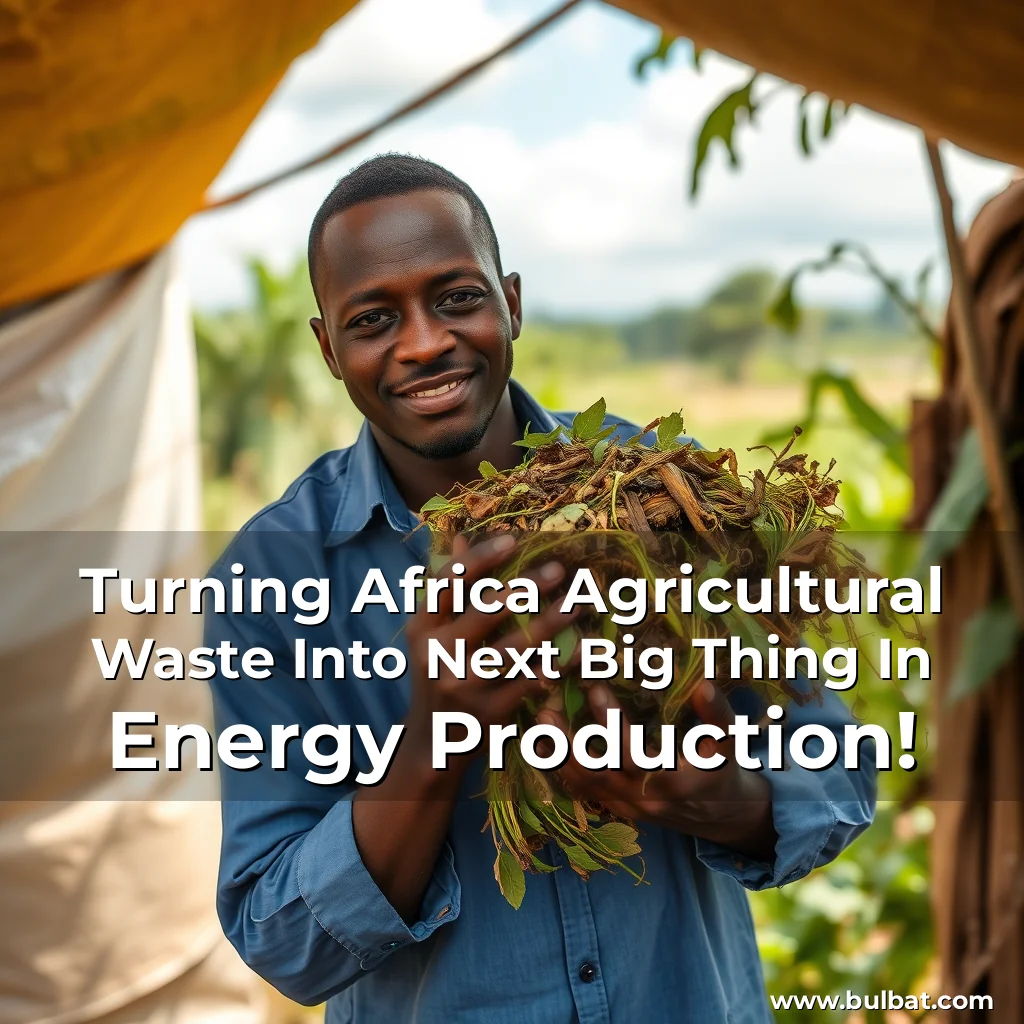
Africa is home to some of the world’s richest farmlands, with agriculture playing a vital role in the economy and the lives of millions. The continent produces a wide range of crops and food products, making it a global agriculture powerhouse. However, this impressive output is being undermined by a staggering food waste challenge that could otherwise be used to support economic growth. Every year, nearly one-third of Africa’s agricultural output is lost or wasted. The issue is even more acute in sub-Saharan Africa, with a 37% rate of food waste. This waste diminishes the potential of Africa’s agricultural bounty and represents a missed opportunity for innovation and sustainability, waste that could otherwise be transformed into a valuable resource. Researchers are exploring how agricultural waste can be converted into hard carbon for sodium-ion batteries.
A promising breakthrough in this area is the use of biomass waste to produce hard carbon, a critical material for sodium-ion batteries.
The Benefits of Bio-Derived Hard Carbon
Using biomass waste to produce hard carbon for sodium-ion batteries offers several benefits. Firstly, it provides a sustainable and renewable resource. Biomass waste is a widely available, renewable, and abundant resource in countries like Morocco and across Africa. Secondly, the production of bio-derived hard carbon requires less energy than synthetic alternatives. This reduces the overall carbon footprint and promotes a more circular economy by repurposing waste for energy applications. Thirdly, the use of biomass waste to produce hard carbon supports a circular economy by minimizing landfill accumulation and promoting more sustainable resource use.
The Process of Converting Biomass Waste into Hard Carbon
The conversion process involves several steps:
•
- Pre-treatment: collecting, drying, and grinding biomass into smaller particles.
- Pyrolysis: heating biomass at high temperatures in an oxygen-free environment to remove volatile compounds and leave behind a porous carbon structure.
- Post-treatment: refining the carbon with catalysts to enhance its electrochemical properties and improve battery performance.
Challenges in Scaling Up the Technology
Despite its promise, scaling up bio-derived hard carbon for commercial sodium-ion batteries faces several challenges. The key challenges include:
•
- Material consistency: different types of biomass have varying compositions, which affects the final carbon properties.
- Energy consumption: the pyrolysis process requires significant energy input.
- Industrial adoption: integrating bio-derived hard carbon into commercial battery production requires extensive validation, testing, and compatibility assessments.
Opportunities for Innovation and Local Development
These challenges present an opportunity for innovation and local development. African countries, including Morocco, generate vast amounts of agricultural waste, which offers an opportunity to establish a competitive and sustainable sodium-ion battery supply chain. This shift could create new employment opportunities in biomass collection, processing, and battery production, which would in turn support local economies. In addition, promoting green energy solutions aligns with global sustainability goals and enhances energy security for the continent.
From Research to Real-World Application
Research in bio-derived hard carbon is advancing rapidly. Institutions like University Mohammed VI Polytechnic (UM6P) in Morocco are supporting pilot-scale production, moving from lab experiments to industrial applications. The university is investing in exploring local, sustainable resources like agricultural waste and biomass to develop energy storage solutions that are both environmentally friendly and economically viable.
Morocco and African governments are increasingly aware of environmental challenges and are beginning to adopt policies that support green energy and sustainable technologies, including waste valorization and green hydrogen.
Conclusion
Bio-derived hard carbon has the potential to revolutionize the field of energy storage. By converting agricultural waste into hard carbon for sodium-ion batteries, researchers can create a more sustainable and renewable resource. The opportunities for innovation and local development are significant, and the shift towards bio-derived hard carbon could create new employment opportunities and support local economies. The challenges in scaling up the technology are significant, but with continued research and innovation, it is possible to overcome them. As the world moves towards a more sustainable future, the potential of bio-derived hard carbon for energy storage is undeniable.
Key Points
• Bio-derived hard carbon has the potential to revolutionize the field of energy storage. • Agricultural waste can be converted into hard carbon for sodium-ion batteries. • The use of biomass waste to produce hard carbon supports a circular economy by repurposing waste for energy applications. • Scaling up the technology requires overcoming challenges such as material consistency, energy consumption, and industrial adoption. • The shift towards bio-derived hard carbon could create new employment opportunities and support local economies.
Definitions
•
: the process of heating biomass at high temperatures in an oxygen-free environment to remove volatile compounds and leave behind a porous carbon structure. •
: a type of battery that uses sodium ions instead of lithium ions for energy storage. •
: waste material derived from organic sources, such as agricultural waste, wood, and other plant materials. •
: an economic system where waste is repurposed for energy applications, promoting sustainable resource use and reducing landfill accumulation.
Tables
| Step | Description |
|---|---|
| Pre-treatment | Collecting, drying, and grinding biomass into smaller particles. |
| Pyrolysis | Heating biomass at high temperatures in an oxygen-free environment to remove volatile compounds and leave behind a porous carbon structure. |
| Post-treatment | Refining the carbon with catalysts to enhance its electrochemical properties and improve battery performance. |
Quotations
“Bio-waste is really giving it a second life. We’re preventing it from being burned or dumped into landfills, like farmers usually do.” – Zineb Kassab
“It’s a circular economy we are creating in a closed loop system where waste is transformed into high added value materials for energy applications.” – Zineb Kassab
Highlights
* Bio-derived hard carbon has the potential to revolutionize the field of energy storage.
References
* Morocco World News: Morocco to Invest in Research on Bio-Derived Sodium-Ion Batteries
* Morocco World News: Morocco to Launch New Research Project on Bio-Derived Sodium-Ion Batteries
Keywords
Bio-derived hard carbon, sodium-ion battery, agricultural waste, pyrolysis, circular economy, sustainability, renewable resource, energy storage.

news is a contributor at BulBat. We are committed to providing well-researched, accurate, and valuable content to our readers.